FSIAD
Female Sexual Interest/Arousal Disorder — when desire and physical arousal are both affected

Women's Sexual Health · Online Consultation
Low libido is one of the most common — and most under-discussed — concerns in women's health. Most women never mention it to a doctor. Talk to one privately, from home, and find out what's actually going on.
Certified
doctors
100%
encrypted
At-home
lab testing
Low libido means a persistent, distressing drop in sexual desire — not an occasional off week, but a sustained pattern that bothers you or affects your relationship. Clinically, this is often called low desire disorder, or Female Sexual Interest/Arousal Disorder (FSIAD) when desire and physical arousal are both affected.
Everyone has fluctuations in desire. A demanding week, a bad night's sleep, or a stretch of low mood can all dampen interest temporarily. It becomes a clinical concern when the reduced desire is persistent, unwanted, and causes you distress — not simply when it doesn't match a partner's expectations or a number you've read online.
FSIAD
Female Sexual Interest/Arousal Disorder — when desire and physical arousal are both affected
Multi-factor
Hormones, PCOS, menopause, stress, medications, and relationships often overlap
Treatable
Diagnosis-first care can restore desire, comfort, and confidence
The common thread is a noticeable, unwanted change from your own baseline.
Desire sits at the intersection of hormones, mental health, relationships, and physical health — effective treatment depends on identifying which is driving your experience.
Oestrogen and testosterone both play a role in desire and arousal. Imbalance from perimenopause, thyroid dysfunction, or ovarian conditions can directly reduce libido, lubrication, and sensitivity.
Elevated androgens alongside insulin resistance can affect body image, mood, and desire simultaneously — one of the more overlooked causes of low libido in women.
Declining oestrogen brings vaginal dryness, thinning tissue, and reduced blood flow — plus hot flushes, sleep disruption, and mood changes. One of the most common and most treatable causes.
Chronic stress raises cortisol, which suppresses the hormonal signalling needed for desire. Anxiety and depression compound this by dampening the reward pathways behind desire itself.
SSRIs/SNRIs, some hormonal contraceptives, antihypertensives, antihistamines, and certain antipsychotics can all suppress desire as a side effect.
Unresolved conflict, feeling emotionally unseen, past trauma, or the exhaustion of caregiving can quietly erode desire — as can poor sleep, fatigue, and sedentary habits.
Does PCOS affect libido? It can. The hormonal disruption in PCOS — elevated androgens alongside insulin resistance — affects mood, body image, and desire together. Irregular cycles and weight changes can further compound the emotional impact on sexual confidence. Does menopause reduce sexual desire? Commonly, yes. Can stress reduce sex drive? Reliably, yes. Can medications reduce libido? Yes — if your low libido started around the same time as a new medication, review it with a doctor; never stop medication abruptly on your own.
Treating assumed hormonal low libido with supplements, when the real driver is stress or a relationship issue, simply won't work — and vice versa. That's why diagnosis comes first, always.
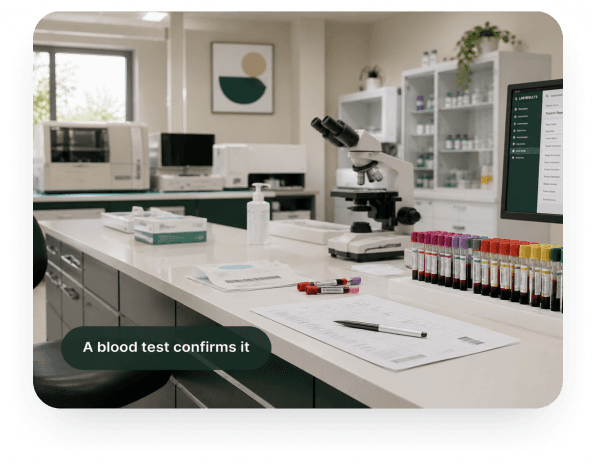 At-home hormonal panel
There's no single fix that works for every woman — any provider promising one is oversimplifying a genuinely multi-factorial condition.
| Cause | Treatment | What to Expect |
|---|---|---|
| Hormonal imbalance (perimenopause, thyroid, PCOS) | Hormone therapy, thyroid management, PCOS-specific treatment | Gradual improvement over 6–12 weeks as hormone levels stabilise |
| Vaginal dryness / menopause-related changes | Local oestrogen therapy, lubricants, pelvic health support | Comfort improves faster than desire; both typically follow together |
| Stress, anxiety, or depression | Psychosexual therapy, CBT, stress management | 70–80% of women report improvement over 6–12 weeks |
| Medication-induced | Dose review or alternative medication (with prescribing doctor) | Improvement often within weeks of adjustment |
| Relationship-related | Couples counselling, communication-focused therapy | Varies; earlier engagement tends to produce better outcomes |
| Multiple overlapping causes | Combined medical + psychological + lifestyle plan | Most women fall here — plans are built to reflect this |

There's no threshold of "bad enough" you need to reach first. If it's on your mind, it's worth discussing.
Covering your history and symptoms — seen only by your assigned doctor.
With a certified sexual health doctor trained specifically in women's sexual health.
Where hormonal causes are suspected — no clinic visit required.
Medical, psychological, or both — built around your specific cause profile.
As your plan evolves and your symptoms change.
A structured medical and psychological evaluation — not a single hormone level or a generic supplement stack.
Certified specialists who take your symptoms seriously and explain what's actually going on, without judgment.
A private, encrypted video consultation from home — no waiting room, no rushed ten-minute slot.
Most women's low libido has more than one cause. Your plan is medical, psychological, or both — reflecting that reality.
The next step, if you're ready, is a private conversation with someone who can help you make sense of it. Book your confidential consultation.
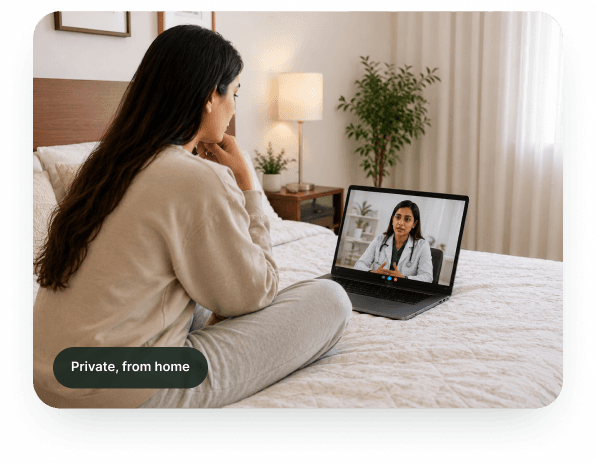
Covering your history and symptoms — seen only by your assigned doctor.
With a certified sexual health doctor trained specifically in women's sexual health.
Where hormonal causes are suspected — no clinic visit required.
Medical, psychological, or both — built around your specific cause profile.
As your plan evolves and your symptoms change.
Low libido is a persistent, unwanted drop in sexual desire that causes you distress — not an occasional low week. If it's lasted more than a few months and bothers you, it's worth discussing with a doctor.